


Costco Wholesale Corporation (Costco) is one of the world’s largest membership-based warehouse retailers, known for exceptional value, high-quality products, and a strong commitment to employee and customer trust. With more than 900 stores across 14 countries, including the United States, Canada, Mexico, the United Kingdom, Japan, and Australia,[1] Costco serves millions of members globally and ranks among the top retailers by sales.[2]
From an environmental, social, and governance (ESG) perspective, Costco has some notable strengths. Costco has industry- leading employee pay and benefits and has been a standout in their defense of diversity, equity, and inclusion (DEI) efforts as companies have broadly retreated or remained silent in response to recent political pressure in the United States. Costco is also the leading retailer of organics in the United States, leveraging their scale and low-cost model to sell more organic food than Whole Foods annually.[3]
Like many large and complex global companies, Costco must manage for the risks and impacts from its operations and vast supply chain. For example, in operating its stores, warehouses, and delivery trucks, Costco contributes greenhouse gas (GHG) emissions to the atmosphere. Further, there have been instances of human rights abuses, toxic chemical mismanagement, and environmental degradation in its supply chain.
That is why for over a decade and a half Trillium has engaged with Costco on a wide range of ESG issues. Through dialogues, letters, and shareholder proposals, we have repeatedly pressed the company to enhance its policies and practices. Sometimes we experience rapid success, but more often, it takes steady and persistent effort to effect real change.
Early Engagement on Sustainability Reporting and Climate Targets
In 2010, Costco provided very limited information on sustainability issues relevant to its business. Seeking greater disclosure, Trillium filed a shareholder proposal. We withdrew the proposal when Costco agreed to produce a comprehensive sustainability report disclosing its GHG emissions, water consumption, and progress on sourcing sustainable seafood. Five years later, Trillium filed another shareholder proposal, this time pressing Costco to adopt a timebound GHG emissions reduction target. The company was not prepared to adopt a rigorous target at the time but did commit to publishing the full extent of its carbon footprint and limit its emissions over the next five years.
By 2021, with threat of climate change even more evident, Trillium sought accelerated action from the company and filed another shareholder proposal asking it to cut its GHG emissions in alignment with the goals of the Paris Agreement.[4] As a result, Costco committed to publishing a Climate Action Plan explaining how it intended to reach its emissions reduction targets.
Seafood Sustainability
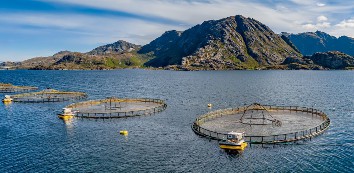
In 2012, with rising concerns about a potential collapse of global fisheries, investors and non-governmental organizations (NGOs) questioned Costco about the sustainability of its seafood. In response, Costco updated its purchasing policies and announced it would stop selling twelve “red list” species, i.e. species at risk of extinction, and move toward requiring farmed salmon suppliers to minimize or eliminate key negative impacts caused by salmon farming.
Human Rights and Labor
Trillium has also engaged with Costco on forced labor, labor relations, and reproductive health. In 2015, after an investigative report by The Guardian exposed rampant bonded and forced labor in the shrimp supply chain in Southeast Asia, we led a coalition of like-minded investors in dialogue with Costco.[5] Subsequently, the company reported new policies and practices and regularly informed investors about the activities of its Seafood Taskforce, an effort aimed at identifying and preventing forced labor conditions in its supply chain.
In 2025, Trillium raised privacy concerns with Costco related to customers who purchase reproductive health-related prescriptions at its pharmacies. Costco responded quickly with details of its policies. That same year, we conveyed our concerns to the company over its stalled labor negotiations with the Teamsters, which were resolved soon after we contacted the company.
Food Waste
In 2016, Trillium spearheaded an investor call with Costco seeking details of its food waste management practices. After a lackluster response by the company, Trillium filed a shareholder proposal requesting enhanced disclosure of its handling of food waste. We withdrew the proposal after improved disclosures and continued to dialogue with Costco on the topic through 2022.
Toxic Chemicals and Product Integrity
Trillium first engaged Costco on chemical safety in 2017 after the company created a Chemical Management Policy. However, it failed to track its performance against this new policy, which led Trillium to file a shareholder proposal in 2022. The proposal asked Costco to provide the missing chemical data and adopt enhanced hazardous chemical reduction policies. In response, the company provided four years of data and a list of chemicals that it had restricted from its Kirkland brand packaging and from thousands of products in its stores. Since then, Trillium has continued to engage Costco and in 2025 it disclosed partnerships with ChemFORWARD, a data trust that provides companies with detailed chemical hazard scores, and Change Chemistry, an industry collaboration driving the development of greener, safer chemicals.
Pesticides and Protecting Pollinators
In 2022, as Trillium became increasingly concerned about the use of pesticides in agricultural production—and their negative impact on biodiversity and pollinator health—we supported Costco’s role in co-founding the Equitable Food Initiative, a rigorous certification program that prioritizes integrating worker voice to ensure food safety and minimal pesticide use in agricultural supply chains. We successfully lobbied the company to report annually on the program’s achievements and to increase grower participation.
Looking Ahead
Trillium’s engagement with Costco demonstrates the power of persistent advocacy. Wins such as improved chemical safety disclosures, seafood sustainability, and climate commitments show that dialogue and, if needed, stronger action can drive meaningful change. As global challenges intensify, Trillium will continue pressing for stronger ESG practices at Costco and beyond.